
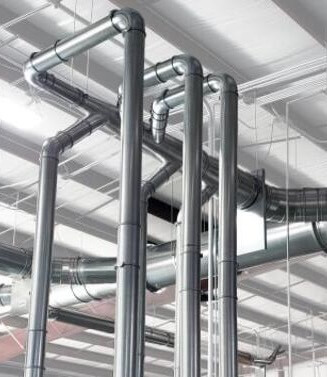
 Maximizing Dust Collection Efficiency: A Guide to Industrial Transitions and Hoods
Summary
Dust collection efficiency depends on properly designed duct transitions and hoods that optimize airflow and capture dust at the source. This guide explains how transition types, hood designs, and material selection reduce static pressure, improve capture efficiency, and lower energy costs in industrial ventilation systems. Choosing the right components ensures safer, more efficient, and compliant dust collection performance.
Understanding Transition Types and Their Applications
In industrial ventilation and dust collection systems, the selection of appropriate transitions and hoods plays a vital role in system performance.
Transitions serve as crucial connection points within ductwork systems, enabling efficient airflow between different shapes and sizes of ducting. The design and configuration of these components directly impact system efficiency, with various options available to accommodate specific space constraints and performance requirements.
Similarly, hood solutions represent the first point of capture in any dust collection system. Their design and placement significantly influence the system's ability to capture and contain particulates effectively.
When properly selected and implemented, these components work together to minimize pressure loss, reduce energy consumption, and maximize collection efficiency.
The key to optimizing system performance lies in understanding the specific requirements of your application and selecting transitions and hoods that provide the best combination of airflow characteristics, space utilization, and capture efficiency.
Rectangle to Round Transitions
Modern manufacturing facilities often require connecting rectangular and round ductwork sections. Rectangle to round transitions serve this purpose perfectly, offering:
- Superior airflow characteristics compared to square transitions
- Ideal configuration for hood applications
- Available in multiple materials including galvanized steel, aluminum, stainless steel, and stainless+ with optional No. 4 finish
Square to Square Transitions
While not offering the same airflow efficiency as rectangular to round transitions, square to square transitions provide practical solutions for:
- Applications with height restrictions
- Situations requiring direct connection between square ducts
- Space-constrained installations
Suction Hoods: Compact Manifold Solutions
Think of suction hoods as compact manifolds rather than traditional hoods. These versatile components:
- Connect up to six closely spaced pickups
- Excel in tight spaces requiring multiple collection points
- Optimize system efficiency through consolidated connections
Router Hoods: Versatile Collection Points
Router hoods share dimensional similarities with surface grinder hoods, offering:
- Optional magnetic mounting for flexible positioning
- Easy placement and adjustment
- Direct replacement capability for surface grinder applications
Barrel Hoods: Efficient Drum Filling Solutions
Designed specifically for 55-gallon drum applications, barrel hoods feature:
- Seamless connection to QF ductwork
- Available in both galvanized and stainless steel
- Optimal dust containment during barrel-filling operations
Canopy Hoods: Wide-Area Coverage
Canopy hoods excel in applications requiring broader coverage:
- Available in 18", 24", 36", and 48" square configurations
- Custom sizes up to 72" x 48"
- 150 fpm capture velocity at 2 ft. distance
- Hemmed end construction for added durability
Slotted Fume Hoods: Energy-Efficient Capture
For welding, grinding, and buffing applications, slotted fume hoods offer:
- More focused airflow patterns than standard fume hoods
- Lower energy consumption compared to downdraft tables
- Greater user-friendliness than source capture mechanisms
- Standard 6" depth across all models
Material Considerations and Performance Notes
When selecting transitions and hoods, consider these material performance factors:
- Galvanized steel offers corrosion protection up to 390°F
- Between 390°F and 480°F, expect some reduction in protective properties
- Stainless steel is a great option for high-temperature or corrosive environments
- Aluminum provides a lightweight option for specific applications
Why Choose Ducting Systems for Your Duct Transitions?
Comprehensive Product Selection
Ducting Systems stocks all major transition types for industrial applications:
- Rectangle to round transitions in multiple sizes
- Square to square transitions for height-restricted installations
- Custom transitions available up to 72" x 48"
- Material options: galvanized steel, aluminum, stainless steel, and stainless+ with optional No. 4 finish
Quality Assurance
All transitions meet stringent industrial standards:
- Temperature-rated materials (galvanized up to 390°F, stainless for high-temp applications)
- Precision-engineered for optimal airflow characteristics
- Quick-Fit (QF) clamp compatibility for easy installation
- Durable construction with hemmed ends where applicable
Expert Support Included
When you purchase from Ducting Systems, you receive:
- Technical consultation to ensure proper component selection
- System design assistance for complex installations
- Post-purchase support for installation questions
- Access to comprehensive product documentation
Benefits of Proper Hood Implementation
Incorporating the right hoods in your dust collection system yields several advantages:
1. Enhanced dust capture efficiency
2. Reduced static pressure throughout the system
3. Lower power consumption and operational costs
4. Fast production and competitive pricing
5. Customization options tailored to specific needs
By carefully selecting the appropriate transitions and hoods, your facility can enhance dust collection system performance, reduce energy costs, and ensure compliance with ventilation and workplace safety standards. Don't underestimate the importance of these components in maximizing system efficiency.
Ready to optimize your system? Contact us today to explore our wide range of high-quality transitions and hoods, and ensure your dust collection system is running at its best.
FAQs: Duct Transitions
What are duct transitions and hoods?
Duct transitions are connector components that enable efficient airflow between different shapes and sizes of ductwork, while hoods serve as the first point of dust capture in industrial ventilation systems.
How quickly can I receive duct transitions ordered online?
Production times are typically fast, with many standard configurations available for quick shipment. Contact Ducting Systems for specific lead times based on your requirements.
Can I get custom transition sizes?
Yes, custom transitions are available up to 72" x 48". Contact the technical team to discuss your specific dimensional requirements.
What’s the difference between galvanized and stainless steel transitions?
Galvanized steel provides corrosion protection up to 390°F and is cost-effective for most applications. Stainless steel is recommended for high-temperature environments (above 390°F) or corrosive conditions.
Do transitions come with installation hardware?
Most Nordfab transitions are designed for Quick-Fit® (QF) clamp connections. Clamps and gaskets are typically sold separately to ensure compatibility with your existing system.
How do I know which transition type I need?
Consider your space constraints, duct shapes, and airflow requirements. Rectangle to round transitions offer the best airflow characteristics, while square to square options work better in height-restricted installations. The technical team at Ducting Systems can help you select the optimal solution.
You may also like:
• Industries that Benefit Most from Nordfab®
• Key Components of Nordfab® Ducting Systems
• Everything to Know About Clamp Together Ducting